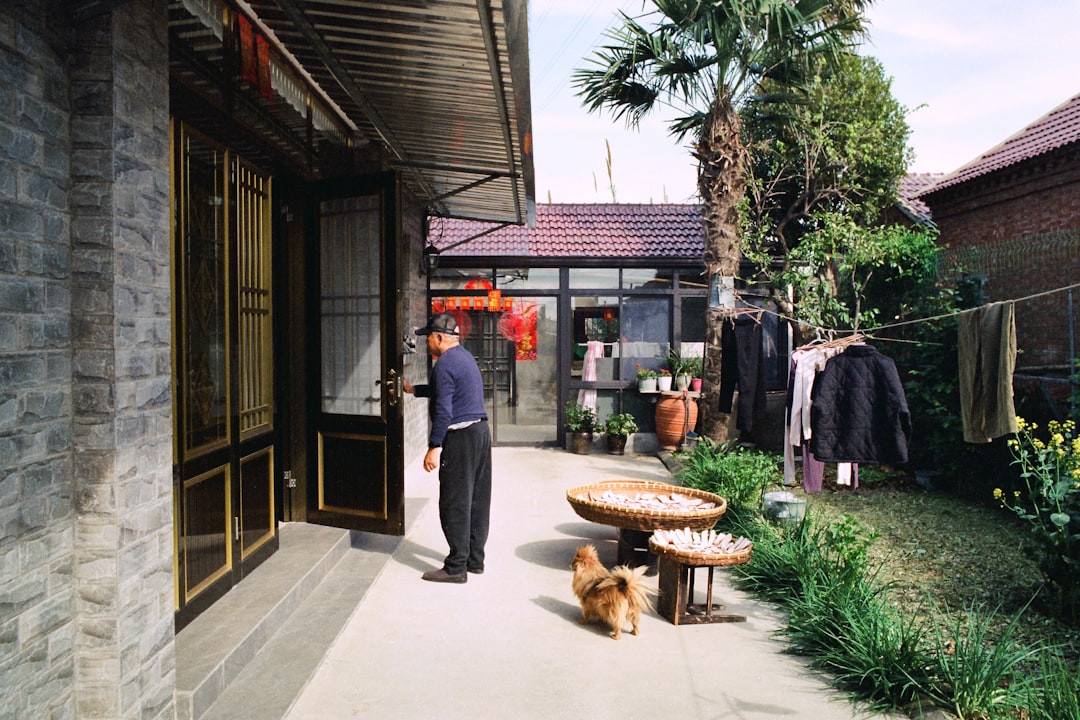

The man at the steamed bun cart didn’t look up when I arrived. Both hands were occupied — one folding dough, one adjusting the steam valve. Four people ahead of me, all on their phones. A bike-share station to the left, a pharmacy with a green cross sign to the right. Somewhere behind me, a delivery scooter beeped once to get through.
This was 7:15am in a second-tier Chinese city. And none of it — the cart, the phones, the unhurried folding of dough — matched anything I’d read in a month of following international news coverage before the trip.
Not because the coverage was wrong. Because it was covering something else entirely.
What News Coverage Actually Selects For
Geopolitical journalism has a structural bias that has nothing to do with ideology: it selects for events, not conditions. What changed, not what’s continuous. And for a country of 1.4 billion people living their lives, what’s continuous is almost everything.
In 2023, Chengdu was experiencing what local residents described as a restaurant boom — new places opening faster than food media could cover them, from hole-in-the-wall Sichuan spots with six seats to multi-story establishments with reservations weeks out. This was happening simultaneously with events in the same city that generated significant international coverage. Both things were real. One was documented extensively. The other was essentially invisible to anyone following the news.
This is not a political observation. It’s a structural one. The news lens is pointed at power and events. It is definitionally not pointed at the man folding dough, or the restaurant boom, or the pharmacy, or the four people having the same Tuesday morning that 400 million other people are also having right now in cities you’ve never heard of.
The result is a portrait with everything ordinary cropped out. And when you remove the ordinary, you get a place defined entirely by its tensions and its landmarks — which is a partial truth that functions, in practice, like a distortion.
What This Means If You’re Actually Going
The traveler who arrives with that portrait will spend the first few days in a state of low-grade friction, waiting for what they’re seeing to match the frame they brought. It doesn’t. The city is just there — doing what it does, indifferent to both the coverage and the expectation.
This adjustment is actually the most interesting part of arriving somewhere with a strong prior image. You start noticing what you didn’t expect to notice. The quality of the metro. The density of restaurants on a single block. The particular way a morning market assembles and disassembles itself. The things the coverage had no reason to show you, because they weren’t events.
I think of it as the understory question — from ecology, the layer of growth that exists beneath the forest canopy, where most of the biodiversity actually lives, where you have to slow down and look carefully to see what’s there. The canopy gets all the light. The understory doesn’t photograph well.
That’s the layer worth paying attention to. Not because the canopy isn’t real — it is — but because everyone else is already covering it.
Once a month, I send a dispatch that doesn’t make it onto the site — the quieter observations, the things that stuck with me. Subscribe here if that sounds like your kind of reading.
Discussion