
The wrong picture is a slab of limestone with a table under it, like a picnic that got ambitious.
The right picture is a karst cave — a real chamber inside the mountain: stalactites, damp air, a ceiling that formed water molecule by water molecule over geological time. In Chinese it is 溶洞. In English travel talk it is too often flattened to “limestone,” which makes people imagine rock décor. What Guizhou is selling, and what travelers are actually queuing for, is dinner inside a cave.
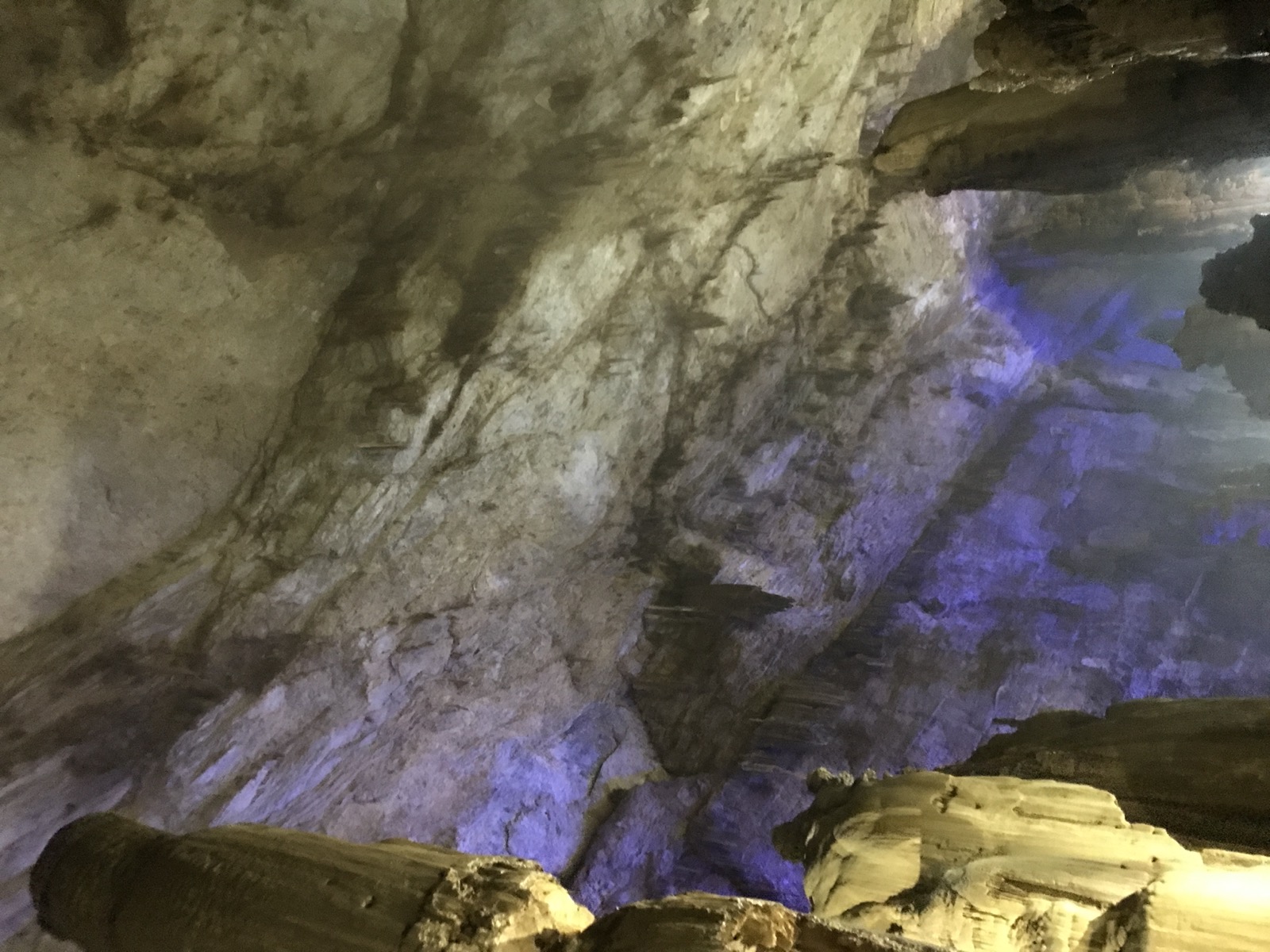
Zhijin Cave, Guizhou — a karst chamber, not a rock ledge. Photo: Wikimedia Commons (CC BY-SA).
That distinction matters before any metaphor does. Emotional substitution collapses if the room in your head is wrong.
Why run into a cave to eat hotpot?
Start with the unromantic fact, because Guizhou’s karst does not care about your aesthetics.
These caves hold a stable cool — often roughly the mid-teens to low twenties Celsius, depending on the site — while summer outside can be punishing. Walk in and the temperature drops before the menu arrives. Put a boiling pot in that air and you get a contrast Chinese comments repeat until it becomes a slogan: hot pot, cool cave — steam rising while your back stays dry. Reddit travelers describe the same surprise in plainer English: outside hot, inside suddenly not; even with broth raging, you are not sweating through the meal.
That is not “nature worship.” That is climate logic wearing a dining table.
There is also an older, quieter layer under the trend. In karst country, caves have long been used as cool storage — for food, for ferment, for things that spoil in heat. Coverage of cave hotpot near the Guizhou–Chongqing belt sometimes traces chili pastes and stocks back to cave fermentation and cave keeping. I would not romanticize that into “Guizhou people have always held banquet hotpot underground as daily life.” Most of what you see on Douyin now is designed. But the permission to treat a cave as a working room — not only a sightseeing tunnel — did not appear from nowhere.
Then comes the part your instinct named correctly: China is not short on dining rooms.
Fine restaurants, plastic-stool shops, mall food courts, night-market stools — the catalog of “where a meal can happen” is already exhausted for a lot of domestic travelers. When every typology feels familiar, the next move is not another interior style. It is to put the meal inside a landscape that still has shock left in it. Guizhou’s answer, loud on Chinese social platforms over the last few summers, is 溶洞+: cave plus hotpot, cave plus coffee, cave plus camping, cave plus light adventure. Official and trade coverage frames it as new consumption scenes — immersive, shareable, cool in summer, useful for county tourism. Visitors say the quiet part out loud in comments: 出片, 氛围感, “unique,” “I’ll show off this feed for months.”
So if you ask me what cave hotpot is, I would not start with poetry.
I would say: it is a practical cool room that became an experience product, riding a national appetite for emotional surcharge and novelty once ordinary restaurant stages feel used up. The cave is the attraction; the hotpot is the social engine Chinese diners already trust; together they make a scene you cannot get from another glass box with good lighting.
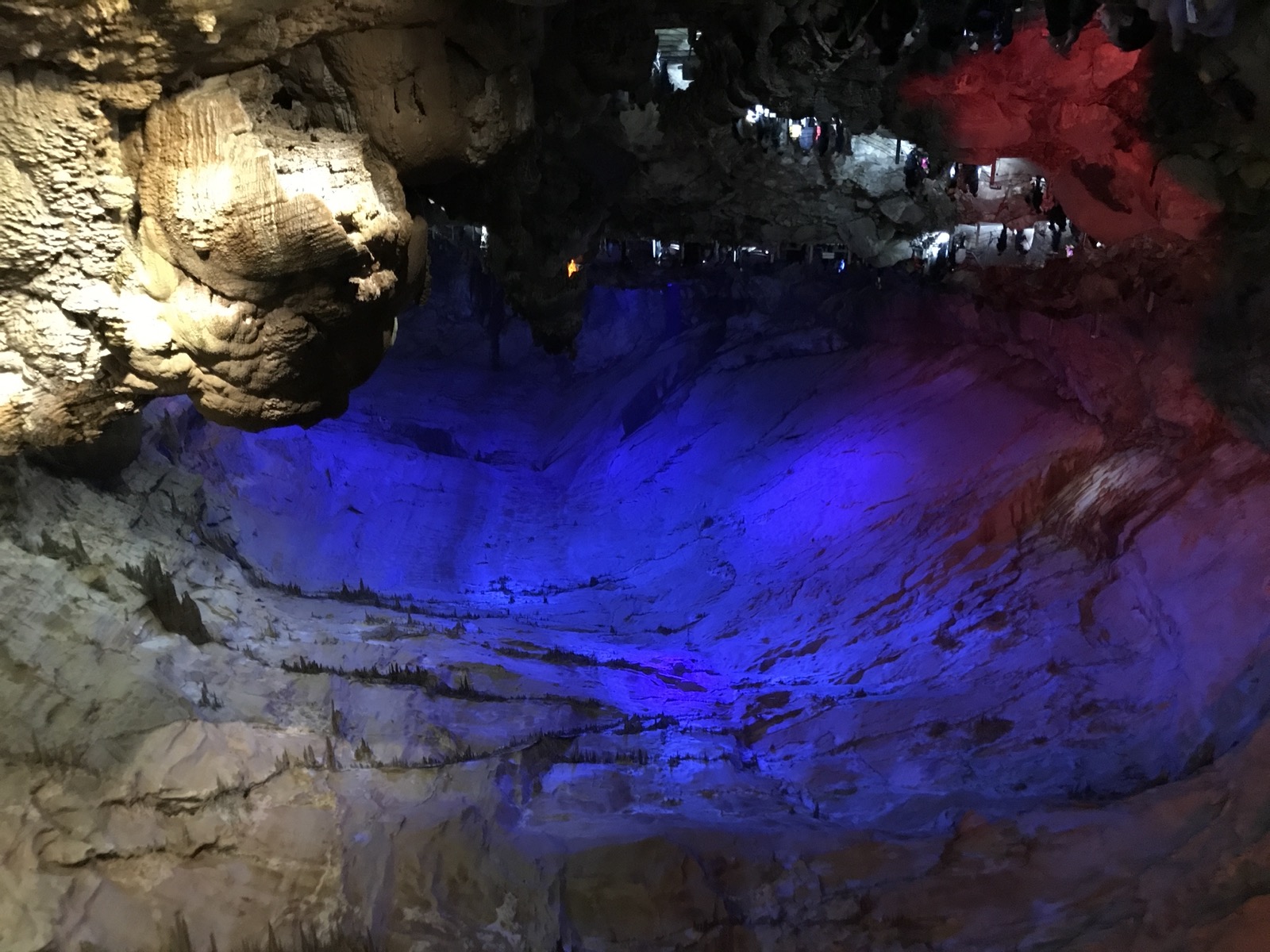
Same cave system — people moving through the chamber at tourist scale. The hotpot venues elsewhere in Guizhou lean on this kind of underground space, not a decorative rock wall. Photo: Wikimedia Commons (CC BY-SA).
What the evening actually feels like
The version worth staying for is sensory before it is ideological.
You enter and the outdoor heat lets go. The air turns damp. Sound behaves badly — laughter arrives late, voices glance off stone. Lights are usually added (pure dark would kill Instagram and dinner service both). The pot goes on. Steam meets cool. Mushrooms, if you are lucky in Guizhou season, taste like the province more than the cave does. Ordering is often QR-and-WeChat ordinary. The extraordinary part is the envelope around the ordinary act.
There is also a product version with a script and a spotlight — the room arranged for your camera before your hunger. You will know it. Walk out if the performance outweighs the pot. Guizhou will not be insulted; it has more caves.
I am not anti-spectacle. I am against mistaking a clever climate-and-content invention for mystical communion with stone. The honest pleasure is narrower: you are eating a familiar Chinese social meal inside an unfamiliar Chinese geology, and the temperature makes the familiarity feel new.
What I would keep
If your Southwest two weeks still has room for Guizhou, treat cave hotpot as one sharp specialty day, not the meaning of the province. Pair it with what “sour” means at the table in ordinary rooms the next day — otherwise you only bought humidity and a caption.
The insight I trust is not “limestone is furniture.” It is this: when dining rooms feel finished, Guizhou puts the table inside the mountain’s air-conditioning — and calls the contrast an experience. That is why people run into a cave to eat hotpot. Not because rock is romantic. Because cool air, boiling broth, and a shareable underground stage solve three problems at once: heat, boredom with familiar venues, and the need for a feeling strong enough to post.
Leave Guizhou on the map for that reason. Fly over it, and you miss both the climate trick and the cultural moment that made the trick into a trend.
Discussion