
Most Chengdu trips become a checklist before the suitcase is open.
Pandas. A famous hotpot. A night market that photographs like every other night market. Then the airport. The city is large enough to absorb that itinerary without complaint. It will feed you, pose for you, and send you home with proof you “did Sichuan.”
I am not anti-panda. I am anti-geometry that treats Chengdu like a mall directory.
The version of the city I trust asks for a smaller map. Not a secret map. A smaller one: one neighborhood you can walk without negotiating a taxi between every appetite. Sleep there. Wake there. Eat there. Walk the same street twice before you decide you understand anything. Forty-eight hours is enough if you stop collecting and start repeating.
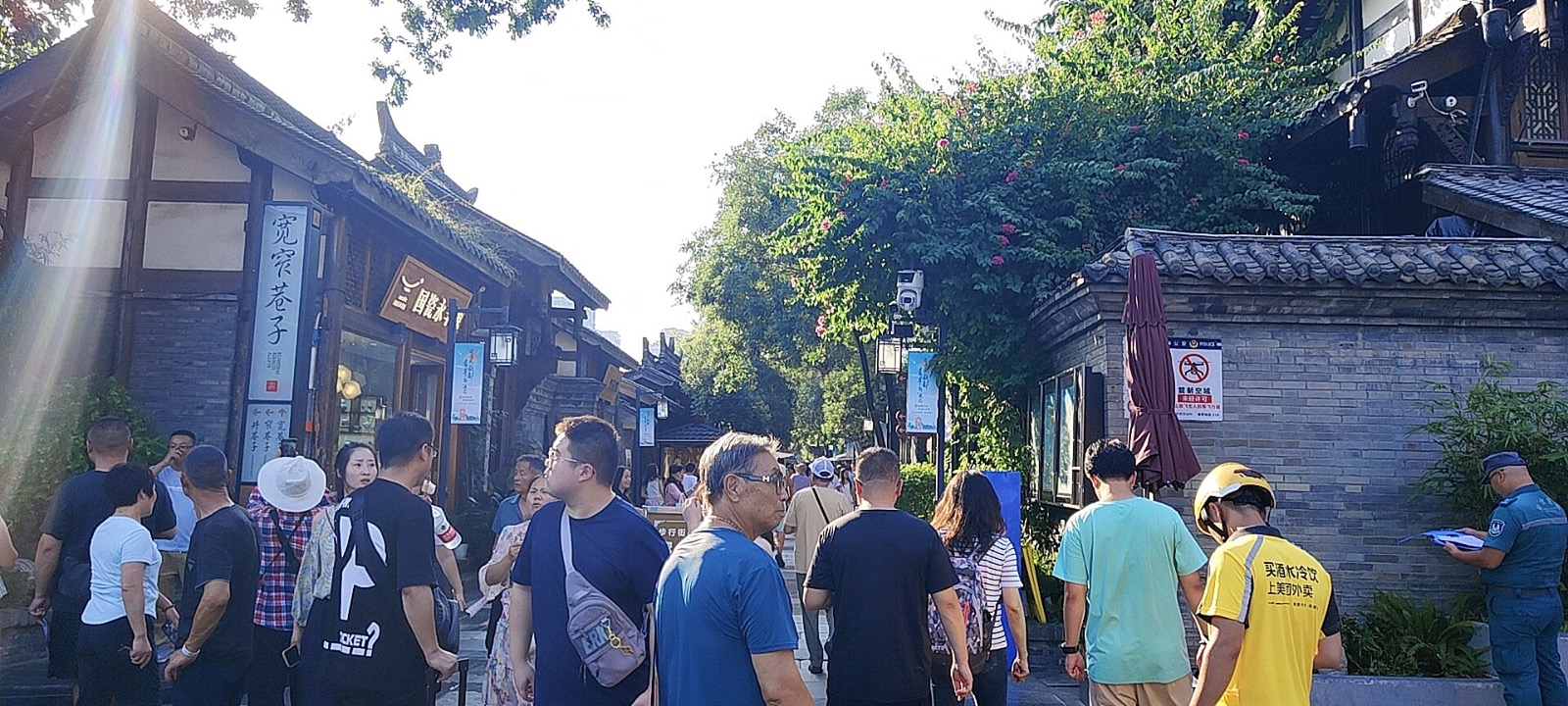
Chengdu rewards walking radius more than pin density. Photo: Wikimedia Commons (CC).
The checklist is loud. The working radius is quiet.
Chengdu’s reputation is earned and over-processed at the same time. Spicy. Laid-back. Pandas. Teahouses. All true enough to become captions, and captions become a route. The damage is not that the captions are false. The damage is that they arrive pre-sorted, so the trip never has to choose a temperature.
A working radius forces a choice.
You pick a patch of city where morning tea, lunch steam, and an evening table can happen without turning transportation into the main character. University-adjacent streets, a residential grid with too many noodle shops and not enough English menus, a corridor that tourists skim at peak hour and locals reclaim after — the name matters less than whether you can fail a little without calling a car. If you need a new district for every meal, you are still collecting.
I will not turn this into a branded neighborhood ranking. Rankings are how checklists regenerate. What I will say is practical: if you only have one sharp Sichuan stop inside a Southwest line — before Guizhou’s sour rewrite or Yunnan’s slower register — spend it testing whether Chengdu opens when the map shrinks.
What forty-eight hours is for
Day one is for burning off novelty.
Morning: a teahouse that is not content. Order slowly. Sit until the day has a temperature. Watch who is not performing leisure — the table that came to stay, not to harvest atmosphere for a feed. Midday: follow steam, not rankings. A bowl that arrives without English explanation is often the correct bowl. Eat where the chairs are already warm. Evening: one hotpot or one quieter table — once. Walk home the long way so your feet learn the turns your phone was about to steal.
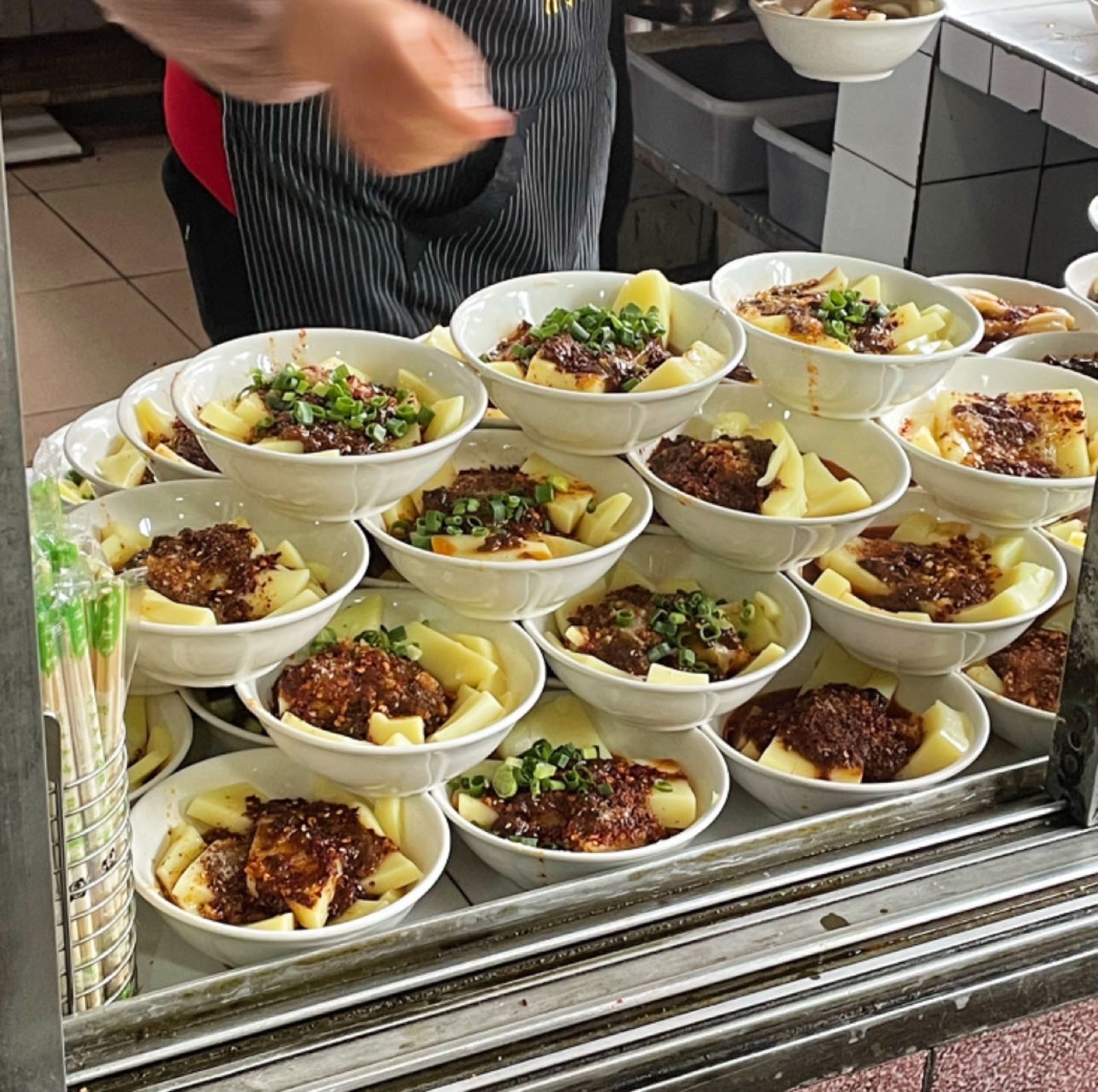
Follow steam before you follow lists. Photo: Wikimedia / Openverse (CC).
Day two is the point.
Same streets, different hour. The second pass is when the checklist loses jurisdiction. The shop you walked past becomes a decision. The alley that felt generic develops a preference. You are not “done” with Chengdu. You are done pretending coverage equals contact.
That is the insight I would keep, if I am allowed only one: Chengdu is not unlocked by adding pins. It is unlocked by repeating a radius until appetite replaces inventory.
How this sits in a Southwest trip
If you are drawing two weeks through Yunnan–Guizhou–Sichuan, Chengdu is often the landing pad — soft, logistical, full of English-language reassurance. Use the softness. Do not let it become a highlight reel that empties the province into three nouns.
Leave room afterward for Guizhou’s table rewrite — including cave hotpot as climate-and-experience logic, not as a stunt — and for Yunnan doors like Tengchong that refuse postcard speed. Chengdu’s job, in that arc, is to teach you the cost of the checklist early, while the stakes are still bowls and teahouses rather than whole provinces.
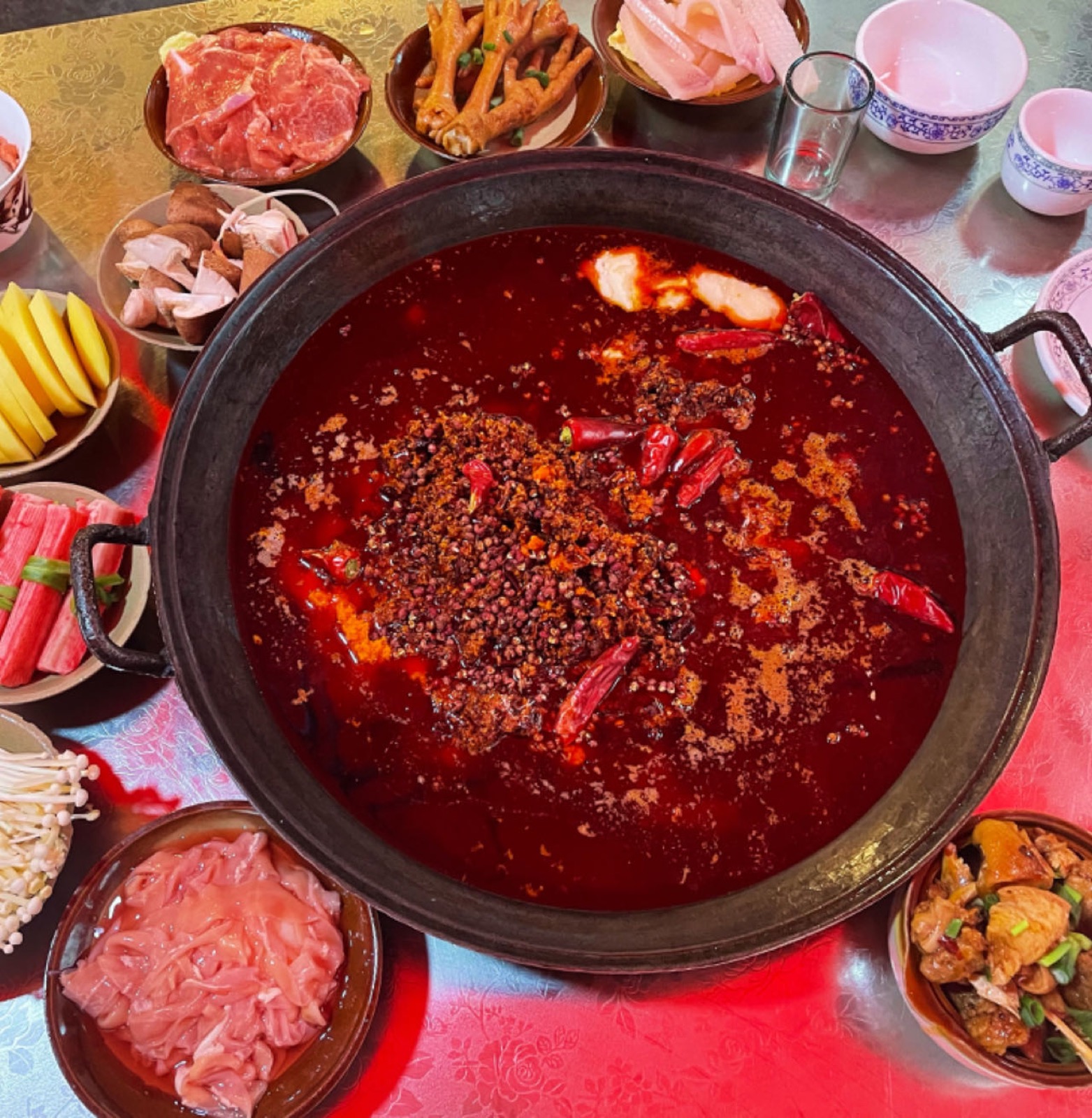
One evening table is enough. Collection is the habit to break. Photo: Wikimedia Commons (CC).
The test you can actually run
Before you add another pin, ask whether your next twelve hours can happen inside a circle you can walk. If the answer is no, the map is still lying to you in the voice of convenience.
I wrote a shorter field note under Eat for the same geometry. This dispatch is the longer argument: forty-eight hours, one neighborhood, same street twice — not because Chengdu is small, but because a large city only becomes specific when you stop trying to finish it.
Discussion