Most travelers meet Chinese tea as a product category: green, oolong, something to buy in a tin.
Then someone sits you at a Chaozhou table — small pot, quick pours, cups the size of a thimble — and the first reaction is almost always the same: ceremony. A tasting. A cute ritual between sights. Something to photograph before the next street of paifang arches.
That reading is the failure mode.
Gongfu here is not a flight. It is how the table builds time. The small pot is not preciousness for Instagram. It is a tool for repeating a short cycle until the leaf opens and the conversation stops competing with a checklist. If you leave after the first pretty pour, you collected a performance. Stay for the third and fourth rounds and the table stops announcing itself. It becomes a clock.
I am writing this as a deliberate step outside the Southwest lane we usually work — Guizhou’s sour grammar, Tengchong’s watchful pace — because the country is larger than one temperature, and Chaozhou is one of the clearest places to feel another instrument.
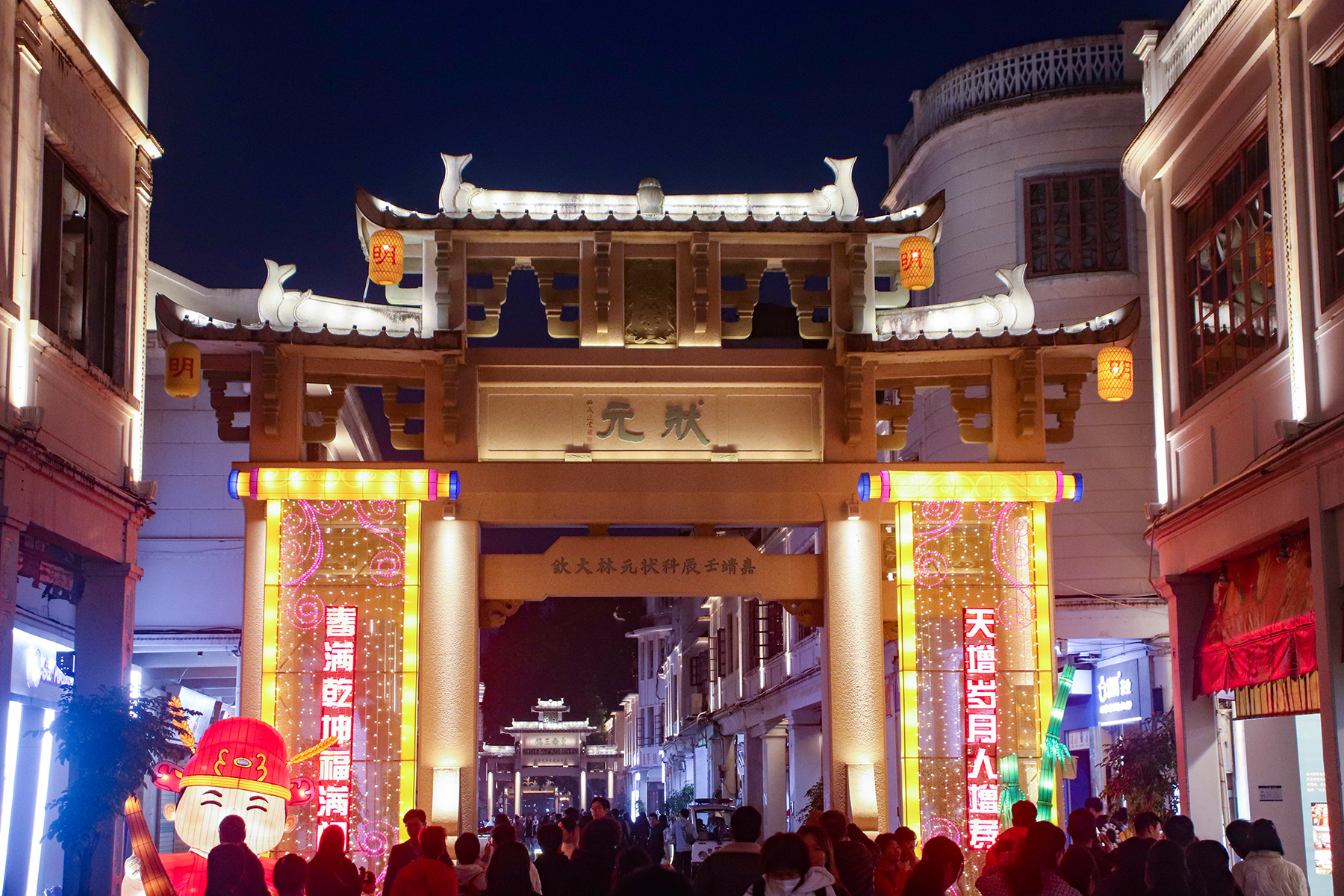
The point is not a branded tea house. The point is whether the pours are doing work after the novelty fades. Photo: site archive.
Ceremony is what the first pour sells you
The first Chaozhou session can feel like theater: rinse, pour, discard, pour again, tiny cups, someone watching whether you hold the cup correctly. That feeling is real. It is also incomplete.
Ceremony is a tourist’s unit of time — one elegant loop, one caption, one “I did the tea thing.” Structure is what locals stop explaining: the short infusion that keeps bitterness from dominating, the reason the pot is small, the reason you do not treat the leaf like a single steeping event.
I will not turn this into a brand directory or a ranked list of houses. Directories regenerate checklists. The portable test is simpler: after the first pretty pour, does the table still organize the afternoon — or are you already standing up for the next attraction?
What “gongfu” means when it is not a show
Gongfu is effort made precise — not effort made decorative.
At a Chaozhou table that usually means: small vessel, hot water, short contact, many rounds. The leaf is allowed to change. You are allowed to stop talking about the leaf. Food may arrive later, or not; the table does not need a tasting menu to justify itself. The point is not to finish a flight of named cultivars. The point is to inhabit a tempo that refuses the sightseeing clock.
That is why this belongs next to a workshop day without the gift-shop script. Process needs a clock that is not hunting pins. Chaozhou’s tea table is one of Guangdong’s clearest clocks — and it is easy to miss if you only came for arches and photographs.
How this sits beside the Southwest line
A two-week Southwest temperature sequence still holds as a deep instrument. Chaozhou is not a replacement. It is a reminder that skipping the golden triangle once does not mean every honest trip must live in Yunnan–Guizhou–Sichuan forever. Small cities on other coasts have their own grammars. Tea is one of them.
The insight I would keep if I am allowed only one: Chaozhou gongfu tea is not a tasting flight. It is a way of building an afternoon — and ceremony is what you get when you leave before the structure shows.
Discussion