
Western packing lists treat China’s high-speed rail as either a marvel to photograph or a checkbox to survive.
Marvel: stand on a platform, film the white nose cone, caption infrastructure. Survive: download an app, panic about passport gates, then treat every two-hour hop as permission to add another city because “the trains are easy.”
Both readings miss what the Southwest network is actually for.
HSR here buys nights — not cities.
The failure mode is speed used as a shopping cart. Chengdu to Guiyang looks short on a map of minutes. People fill the saved hours with another pin, another transfer, another evening that never settles. The rail did its job. The itinerary used the surplus to become greedier.
I am not writing a booking tutorial on this page. Apps, station names, and passport quirks belong in Getting by when that module is ready. This dispatch is the editorial rule that should sit above the tickets.
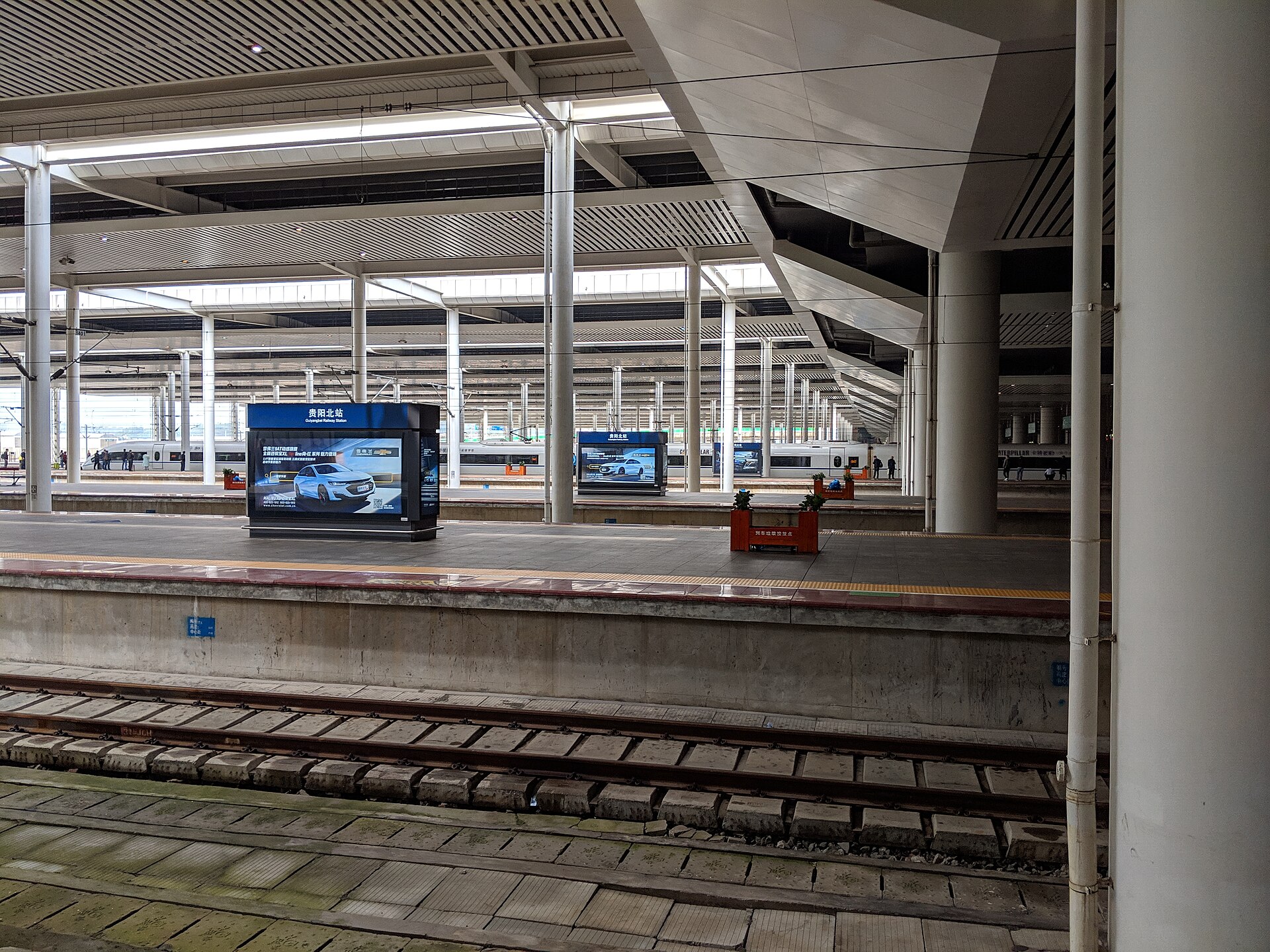
The train shortens the map. It does not shorten the time a province needs to rewrite you. Photo: site archive.
Easy distance is not cheap experience
In a two-week Southwest temperature sequence — soft landing, sour rewrite, slower ground — the rail is how the sequence stays honest. You can leave Chengdu without surrendering half a day to a bus. You can reach Guizhou with enough evening left to eat past the first surprise. You can exit toward Yunnan without inventing a third “must-see” city because the hop felt free.
That is the gift: compressed distance that protects the nights the sequence needs.
What it is not: a reason to run Chengdu–Chongqing–Guiyang–Kunming–Dali as a highlight reel with luggage as the main character. Easy hops make that reel feel responsible. It is still collection.
The portable test
After you book the fast hop, ask one question before you congratulate yourself on efficiency:
Did the hours you saved become another city — or another night where you already are?
If the answer is another city, the rail became a shopping cart. If the answer is another night — the same neighborhood twice, the sour table past novelty, Tengchong’s watchful clock instead of a spa checklist — then you used Southwest HSR correctly.
I will not name every station pairing. Pairings change; the test does not.
What I refuse to romanticize
I refuse the train-as-attraction day: ride for the sake of riding, film the countryside blur, alight nowhere that needs you. I also refuse the myth that foreigners cannot use the network. Friction exists — apps, names, gates — and it is surmountable. Friction is not the insight. The insight is what you do with the time the network returns to you.
The Southwest does not need you to collect more place-names because the white train made them cheap. It needs you to keep the temperature sequence intact: Chengdu’s smaller map, Guizhou’s sour as structure, Yunnan’s slower ground.
The insight I would keep if I am allowed only one: Southwest high-speed rail is not a souvenir ride. It is how you buy nights — and nights are what make the provinces do work.
Discussion